Palm Beach
Bris Aftercare: A 10-Day Guide for Palm Beach Parents
By Rabbi Yossi Srugo | Miami Mohel | miamimohel.com
October 2, 2026
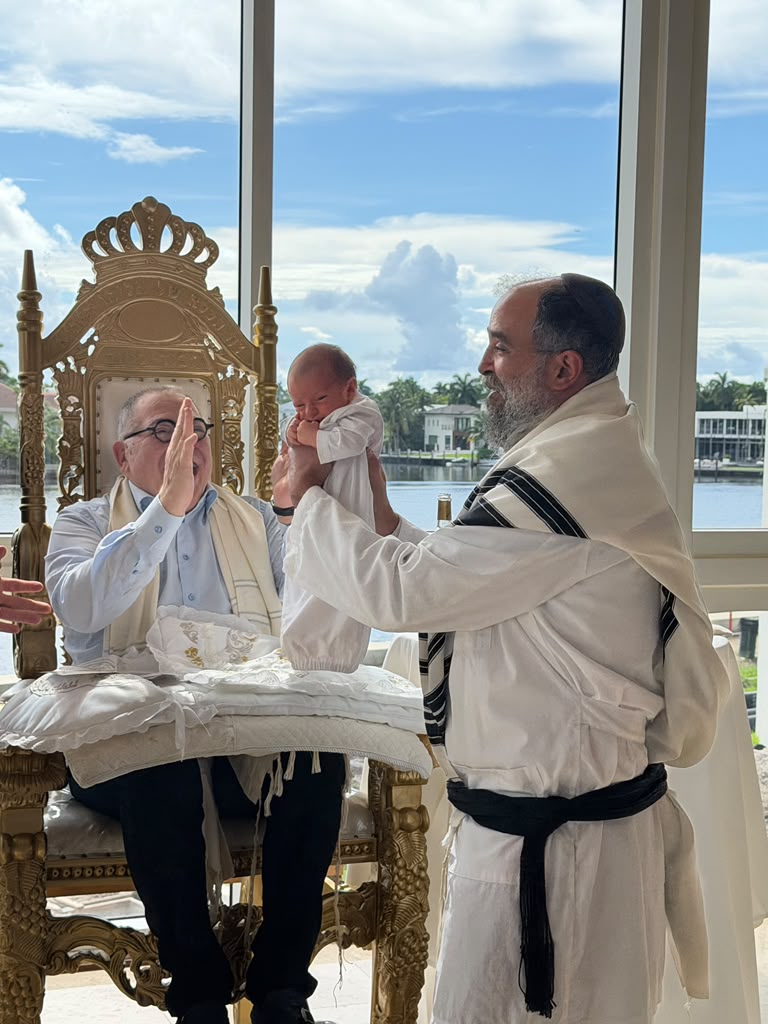
The bris is over.
The room is full of family. The baby is in your arms. The blessings have been said, the wine has been poured, and your son has entered the covenant of Avraham Avinu.
And then everyone goes home.
And the questions begin.
Is this normal? Should it look like that? He's been crying for an hour — is something wrong? What does the diaper change look like tomorrow?
After 19 years and more than 6,000 brisses across South Florida — including many families right here in Palm Beach and the surrounding communities of West Palm Beach, Lake Worth, and Palm Beach Gardens — I can tell you this with certainty: the first ten days after the bris are when parents need the most support — and when most mohels have already moved on.
That's not how I work.
This guide walks you through exactly what to expect, day by day — what's normal, what to watch for, and how to care for your son through every stage of healing.
The First Hour: Right After the Ceremony
Before I leave your home, I hold your son and make sure he is calm. I feed him, soothe him, and stay until the color returns to his face and both parents feel steady.
This moment matters. A calm baby immediately after the bris is not only possible — it is the standard I hold myself to at every ceremony.
Before I go, you receive written aftercare instructions. Not a generic printout. A clear, specific guide tailored to your son's bris, with my direct WhatsApp number at the top.
You will use it.
The Bris Kit: A Gift for Your Family
Every family I work with receives a Bris Kit before I leave — a beautifully packaged keepsake designed to support you through the days ahead and mark this sacred milestone in a way that lasts.
Inside every Bris Kit:
- 🕯️ Shabbat candle — to welcome the first Shabbat of your son's life as part of the covenant
- 📜 Shir HaMa'alot (שיר המעלות) — Psalm 126, traditionally sung at Shabbat and Jewish celebrations
- 🤲 Birkat HaBanim (ברכת הבנים) — the blessing of the children, for parents to recite over their son every Shabbat
- 👶 A onesie for the baby — a special garment to mark the occasion
- ✉️ A personal letter from the Mohel — Rabbi Yossi's words to the family, written with care
- 🩹 Sterile gauzes — everything you need for aftercare
- 💊 Cicatrizant cream — to support and accelerate recovery in the days following the bris
The Bris Kit is not an afterthought. It is part of the experience — a way of saying that what happened in your home today was not routine, and that the care continues long after the ceremony ends.
Day 1: The First 24 Hours
What you will see:
- Some redness and swelling around the site — this is completely normal and expected
- A small amount of bleeding on the gauze or diaper — normal in the first 24 hours
- Your baby may be fussier than usual, especially during diaper changes
- He may nurse or feed more frequently — comfort nursing is natural and encouraged
What to do:
- Keep the area clean and dry between diaper changes
- Apply the petroleum jelly (Vaseline) or ointment I provided generously at every diaper change — this prevents the gauze or diaper from sticking to the site
- Use the gauze wrap as instructed — do not remove it before the time indicated
- Avoid tight diapers that press directly on the site
- Give infant Tylenol (acetaminophen) as directed for comfort if needed
What to watch for:
- Bleeding that soaks through more than one gauze pad in 10 minutes — call me immediately
- If the baby has not urinated within 6-8 hours of the bris — call me
Days 2-3: The Transition
By day two, the gauze wrap comes off — usually during a diaper change, naturally, with the help of the Vaseline. Do not force it. If it seems stuck, add more Vaseline and wait for the next change.
What you will see:
- A yellow or whitish film forming over the site — this is granulation tissue, not infection. It is a sign of normal healing and should not be wiped away
- Continued swelling, which may look more pronounced than day one — this is also normal
- The redness begins to shift from bright red to a more muted pink
What to do:
- Continue applying Vaseline generously at every diaper change — this is the most important step in the entire healing process
- Loose diapers whenever possible
- Sponge baths only — no submersion in water until healing is complete
What to watch for:
- Increasing redness or swelling after day three (it should be improving, not worsening)
- Fever above 100.4°F / 38°C — contact me and your pediatrician
- Foul smell from the site — this can indicate infection and requires immediate attention
- Any change that worries you — send me a photo on WhatsApp
Days 4-5: Steady Progress
By day four, most families start to feel the relief of visible progress.
What you will see:
- Swelling continues to decrease
- The yellow film persists and may look more prominent — this is still normal
- The site begins to look less angry and more settled
- Your baby's behavior during diaper changes should be improving
What to do:
- Keep up the Vaseline at every change — without exception
- Continue sponge baths
- Send me a photo if anything looks different from what you expected
Most families send me a WhatsApp photo around day four. I respond to every single one.
Days 6-7: The Midpoint
Halfway through the healing process, here is what a normal recovery looks like:
- Swelling is significantly reduced
- The yellow film is beginning to fade and separate naturally
- The skin around the site looks calmer and more settled
- Diaper changes are much less stressful for both baby and parents
If your son's healing is tracking with this description — you are doing everything right.
If it is not — that's exactly what my number is for.
Days 8-10: The Final Stage
By day eight, most of the yellow film has resolved. The site looks noticeably different from day one — smaller, calmer, and clearly on its way to full healing.
What you will see:
- The skin is pink and healing
- Minimal to no discharge
- Your baby is completely unbothered during diaper changes
What to do:
- Continue Vaseline until day ten, even if everything looks healed
- You can resume regular baths (submersion) once the site is fully closed — usually around day ten
- No more restrictions on diaper fit
By day ten, most families feel the full relief of a healthy, complete recovery.
What's Normal vs. What's Not
| Normal | Contact me immediately |
|---|---|
| Redness and swelling days 1-5 | Bleeding that soaks through gauze in under 10 minutes |
| Yellow/white film over the site | No urination within 6-8 hours of the bris |
| Fussiness during diaper changes | Fever above 100.4°F / 38°C |
| Small amount of blood on diaper day 1 | Foul smell from the site |
| Swelling that looks worse before better | Swelling that is increasing after day 5 |
| Bruising around the site | Any change that feels wrong to you |
When in doubt — send a photo. I would always rather answer a message that wasn't necessary than have a family wait on something that needed attention.
My Promise to You: 24/7 for 10-15 Days
This is the part of The Brit Milah Experience that most families don't expect — and that every family ends up grateful for.
From the moment I leave your Palm Beach home until your son is fully healed, I am available. Day or night. Weekday or Shabbat. A photo on WhatsApp, a voice message, a call — whatever you need.
I have answered aftercare questions at midnight. On Shabbat through a family member. On Rosh Hashanah. On vacation.
Because the bris is not a transaction. It is a relationship — and the relationship does not end when the ceremony does.
A Note for First-Time Parents
If this is your first son, let me say something directly:
You will worry. That is not a sign that something is wrong. It is a sign that you love your son.
The questions that feel embarrassing to ask — "is this blood normal?", "why does it look like that?", "he won't stop crying" — are the questions I am here for. There are no silly questions in the first ten days. There are only parents doing their best.
Send the photo. Ask the question. That is exactly what I am here for.
Ready to Plan Your Son's Bris in Palm Beach?
If you are expecting a baby boy, or your son has just arrived, reach out to Rabbi Yossi directly. The first conversation is always personal, always unhurried, and always free.
Because the care starts before the bris — and doesn't end until your son is fully healed.
Rabbi Yossi Srugo is a Board Certified and Rabanut Certified Mohel serving Jewish families across Palm Beach, Miami-Dade, Broward, and Palm Beach County. He performs Brit Milah in Ashkenazic and Sephardic traditions, in Hebrew, English, and Spanish.