South Florida
What Happens If the 8th Day Falls on Shabbat or Yom Tov?
By Rabbi Yossi Srugo | Miami Mohel | miamimohel.com
August 21, 2026
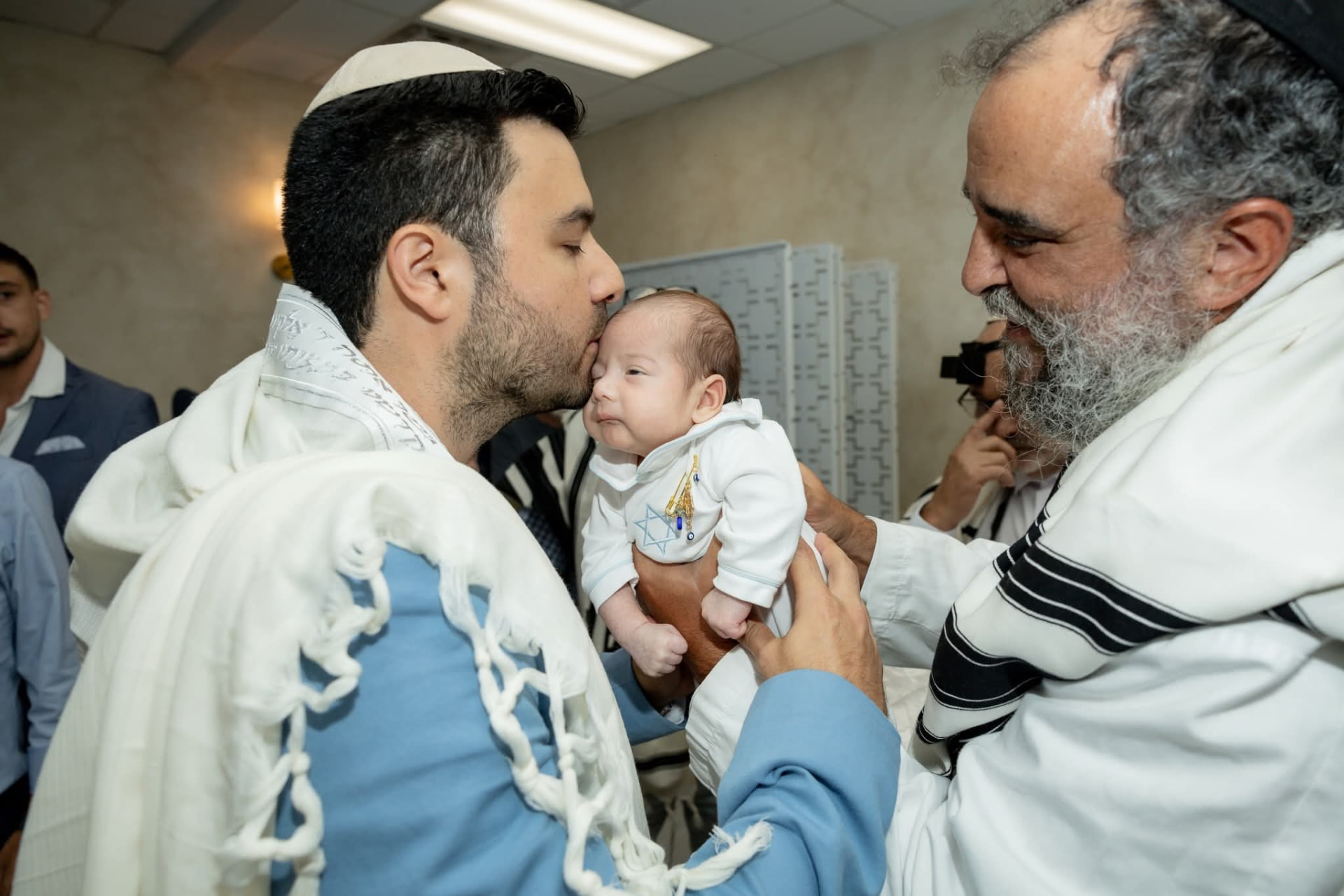
It's one of the first things parents calculate when a baby boy is born.
They count forward eight days. And sometimes — more often than you'd expect — that eighth day lands on a Shabbat, a Yom Tov, or one of the major Jewish holidays.
And then the questions begin.
Do we move the bris? Do we wait? Can a mohel even perform a Brit Milah on Shabbat? What about Yom Kippur?
These are real questions, and they deserve real answers — not vague reassurances, but the kind of clear, halachically grounded guidance that helps families understand exactly what to expect and why.
So let's talk about it.
The Foundational Principle: Brit Milah Overrides Shabbat
Here is the core halachic truth, and it is a profound one:
A Brit Milah performed on its proper time — meaning the eighth day after birth — overrides Shabbat. It overrides Yom Kippur. It overrides most Yom Tovim.
This is not a leniency. It is not a workaround. It is a deliberate and deeply meaningful law that the Torah itself establishes. The Gemara in Tractate Shabbat teaches this explicitly: "Brit milah b'zmanah — docheh et haShabbat." A bris in its proper time pushes aside Shabbat.
In fact, the Zohar points to something remarkable in this: of all the mitzvot in the Torah, the Brit Milah is one of the very few that does not yield to Shabbat. That alone tells you something about the weight and sanctity of this covenant.
So if your son is born on a Tuesday and the eighth day is Shabbat — the bris takes place on Shabbat. Full stop.
What Changes — and What Doesn't
The bris happens on the right day. But Shabbat is still Shabbat, and certain things are done differently.
Before Shabbat begins, the mohel prepares everything. All instruments are sterilized and set. The supplies are transported and staged. Nothing that violates Shabbat is done on the day itself that could have been done in advance.
During the bris, the mohel works within the halachic parameters of Shabbat. There are specific instruments and techniques that a qualified, experienced mohel uses on Shabbat that differ slightly from a weekday bris — details that a certified mohel learns and practices carefully.
The ceremony itself is unchanged in its beauty, its depth, and its meaning. The blessings are the same. The family honors are the same. The Hebrew name is given. The simcha is the same — perhaps even heightened by the knowledge that this sacred moment is taking place on the holiest day of the week.
What About the Major Holidays?
Yom Kippur: Yes. A Brit Milah on its proper eighth day is performed even on Yom Kippur. The baby is not fasting — and the mitzvah does not wait.
Rosh Hashanah: A timely bris is performed on Rosh Hashanah as well. The shofar blowing and the bris can coexist in the same morning.
Pesach, Sukkot, Shavuot: A bris b'zmanah is performed on Yom Tov. There are specific halachic guidelines the mohel follows, and a knowledgeable mohel navigates these with confidence and care.
The second day of Yom Tov (Yom Tov Sheni): This is where things become more nuanced, and where the guidance of a posek — a halachic decisor — may be needed alongside the mohel. Families in the diaspora observe a second day of Yom Tov, and the halacha here requires careful attention. Rabbi Yossi is available to discuss your specific situation and, when necessary, consult with the appropriate rabbinic authority.
The One Exception: A Postponed Bris
This is the most important distinction to understand:
All of the above applies only to a bris performed on its proper eighth day.
If the bris has been delayed — for any reason — it cannot be performed on Shabbat or Yom Tov. A baby who needed extra time in the hospital, or who had elevated bilirubin, or who required medical clearance before the procedure, has what is called a bris shelo b'zmana — a bris not in its proper time. And that bris must wait for a weekday.
This is why it is so important to communicate clearly with your mohel from the very first days of your son's life. Rabbi Yossi stays in close contact with families from the moment they reach out — monitoring the baby's health, tracking the calendar, and planning with you so there are never surprises.
How Rabbi Yossi Handles These Situations
After 19 years and more than 6,000 brisses across South Florida, Rabbi Yossi Srugo has performed Brit Milah on Shabbat, on Yom Kippur, on Rosh Hashanah, and on every major holiday on the Jewish calendar.
He knows the halacha. He knows the preparation required. He knows how to communicate with families weeks in advance so that when the day arrives — whatever day that is — everything is in place and nothing feels uncertain.
When the eighth day lands on Shabbat or a holiday, Rabbi Yossi's approach is the same as always: calm, prepared, fully present. He walks the parents through every detail ahead of time. He arrives with everything ready. And he stays after — holding your son, guiding the recovery — just as he would on any other day.
Because the covenant doesn't stop for Shabbat. And neither does the care.
The Deeper Meaning
There is something worth sitting with here, beyond the practical details.
The fact that the Brit Milah overrides Shabbat is not incidental. It is a statement — from the Torah itself — about the relationship between this covenant and everything else. Shabbat is described as an ot, a sign, between G-d and the Jewish people. And yet the Brit Milah — also an ot, also a sign — takes precedence.
Two signs. One greater than the other. The covenant of the body, enacted with precision and love, on whatever day G-d designates.
If your son's eighth day falls on Shabbat, you are not facing a complication. You are being given a gift — the opportunity to welcome your son into the covenant on the most sacred day of the week.
That is not a problem to be solved. It is a moment to be honored.
Questions? Let's Talk.
Every family's situation is different. If you're calculating the eighth day and have questions about what it means for your son's Brit Milah, Rabbi Yossi is available to speak with you personally — before you book, before you plan, before you decide anything.
That conversation is free. And it will answer everything.
📞 (305) 318-1880
💬 WhatsApp: wa.me/13053181880
🌐 miamimohel.com
Rabbi Yossi Srugo is a Board Certified and Rabanut Certified Mohel serving Jewish families across Miami-Dade, Broward, and Palm Beach County. He performs Brit Milah in Ashkenazic and Sephardic traditions, in Hebrew, English, and Spanish.