Hollywood, FL
The Sandak: The Most Overlooked Honor at the Bris (A Guide for Hollywood, FL Families)
By Rabbi Yossi Srugo | Miami Mohel | miamimohel.com
October 30, 2026
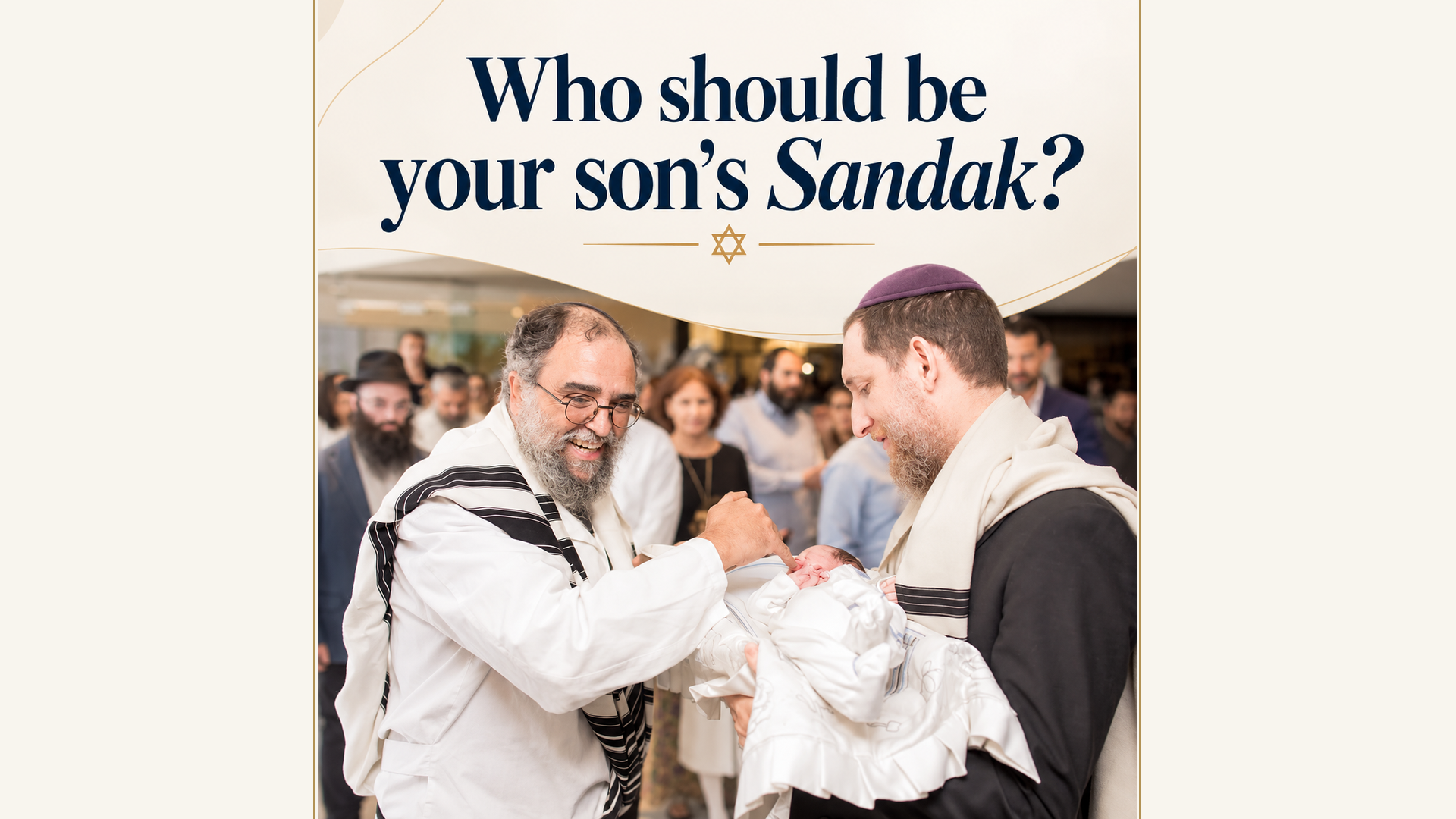
At every bris, one man sits quietly at the center of the room.
He holds the baby on his lap. He stays steady through the most sacred minutes of the ceremony. Every eye in the room is on the baby, the parents, and the mohel.
Yet he is one of the greatest honors of the entire day.
Most guests couldn't tell you his name or explain his role. Most parents, honestly, aren't sure how to choose him.
He is the Sandak. And after 19 years and more than 6,000 brisses across South Florida, including many families right here in Hollywood and the surrounding communities of Hallandale Beach, Dania Beach, and Davie, I can tell you this: the Sandak is the most overlooked honor at the bris, and one of the most meaningful.
What Is a Sandak?
The Sandak is the person honored to hold the baby on his lap during the Brit Milah itself.
He sits in a prepared chair, with the baby resting securely on a pillow on his knees, and holds him steady while the mitzvah is performed. It sounds simple. In Jewish tradition, it is anything but.
Of all the honors at a bris, the Sandak's role is the closest to the covenant itself. He is not watching from the side. He is part of the moment.
Why Is It Such a Great Honor?
Jewish tradition places the Sandak among the highest honors a person can receive at a simcha. Our tradition compares the Sandak to one who offers incense on the altar in the Beit HaMikdash, an image of closeness, holiness, and merit.
That is why families think carefully before choosing. It isn't a seat at the table. It is a place in the mitzvah.
Who Is Traditionally Chosen?
There is no single rule, and customs vary between Ashkenazic, Sephardic, and Chassidic communities. But some choices appear again and again:
A grandfather. The most common choice, and for good reason. A grandfather holding his grandson at the bris is one of the most moving sights in Jewish life, three generations in one room.
A great-grandfather or elder of the family. When a great-grandfather is able to be there, families often feel that the moment carries extra weight.
A person of piety and respect. A beloved rabbi, a teacher, a mentor, or a family friend who has been a spiritual anchor for the parents.
Every family and community has its own customs about who is and isn't given this honor. If you're unsure, ask your rabbi, or talk it through with me. I help families with this question all the time.
How to Choose the Right Sandak
Beyond tradition, here are the questions I encourage parents to think about:
Who is meaningful to your family? The best Sandak is someone whose presence makes the moment feel complete for you, not just someone who is expected to be chosen.
Who is comfortable holding a newborn? The Sandak has to hold the baby calmly and securely for several minutes. Steady hands matter. If someone is nervous around babies, it may be kinder to give them a different honor.
Is it physically comfortable for him? If your father or grandfather is older, think about seating and ease. I take care of the setup so he is comfortable and the baby is secure.
Who would be most moved by it? I have watched grandfathers cry before the ceremony even begins, simply because they were asked. That tells you you've chosen well.
What If More Than One Person Deserves the Honor?
This is one of the most common dilemmas I hear, and there is a beautiful answer: the bris has many honors.
The Kvatter and Kvatterin carry the baby into the room. Someone brings the baby to the chair of Eliyahu HaNavi. Others are called up for blessings. The parents and grandmothers have meaningful roles of their own.
When families plan the honors together, nobody is left out. This is part of what I walk parents through in the week before the bris. A thoughtful distribution of honors turns a potential family tension into a family celebration.
What Does the Sandak Actually Do on the Day?
Nothing complicated, and that is what surprises people. He doesn't need experience or preparation. Here is how it works:
He sits in the chair I have prepared.
He receives the baby from the Kvatter and holds him securely on the pillow.
I guide him, quietly and calmly, so he always knows what to do.
He holds the baby steady through the ceremony, and afterwards he is blessed together with the family.
I also speak personally with every Sandak before the bris, so that he arrives feeling prepared and at ease, not nervous.
A Moment That Lasts
Ask a family about their son's bris years later, and they will often describe the moment the Sandak held him.
The photo of a grandfather with his grandson on his lap, tallit over his shoulders, is the one that gets framed. It is the one the baby grows up looking at, knowing that on the day he entered the covenant, someone who loved him held him through it.
That is what the Sandak gives a family. Not a ceremonial title, but a memory, and a connection that lasts a lifetime.
Planning Your Son's Bris in Hollywood?
If you are expecting a baby boy, or your son has just arrived, reach out to Rabbi Yossi directly. We'll talk through the honors, the Sandak, and every detail of the day. The first conversation is always personal, always unhurried, and always free.
📞 (305) 318-1880
💬 WhatsApp: wa.me/13053181880
🌐 miamimohel.com
Rabbi Yossi Srugo is a Board Certified and Rabanut Certified Mohel serving Jewish families across Hollywood, Broward County, Miami-Dade, and Palm Beach County. He performs Brit Milah in Ashkenazic and Sephardic traditions, in Hebrew, English, and Spanish.