Coral Gables, FL
Is My Baby Going to Feel Pain? What Every Coral Gables Parent Should Know Before the Bris
By Rabbi Yossi Srugo | Miami Mohel | miamimohel.com
August 4, 2026
There is one question that comes up in almost every first conversation I have with parents.
Before the date is set. Before the venue is chosen. Before anything else.
"Is my baby going to feel pain?"
It is always asked quietly — sometimes with a trembling voice, sometimes with an apologetic smile, as if the parent isn't sure they're allowed to ask. But they always ask. And I'm glad they do.
Because that question doesn't come from doubt or fear alone. It comes from love. And love is exactly the right place to start when preparing for your son's Brit Milah.
The Honest Answer
Let me be direct with you, the way I am with every family I speak with.
With the right mohel, the discomfort your baby experiences during the Brit Milah is minimal and brief. Proper pain relief is always used. The procedure itself — in experienced, trained hands — takes only seconds.
I have been performing Brit Milah for over 19 years. I have had the honor of performing more than 6,000 brisses across South Florida — including many families right here in Coral Gables and the surrounding communities of Coconut Grove, South Miami, and Pinecrest. In all those years, the procedure has been consistently brief, calm, and far gentler than most parents expect.
But here is something I have come to understand deeply over nearly two decades:
The answer to "will my baby feel pain?" only addresses half of what parents are really asking.
What Parents Are Really Asking
When a mother or father asks about their baby's pain, they are often also asking something they haven't found the words for yet.
Will I be able to handle it? Will I feel helpless? Will this moment feel wrong — or will it feel right?
These are the fears that sit beneath the surface. And they are completely understandable.
A Brit Milah is not a routine appointment. It is one of the most ancient and sacred mitzvot in Jewish life. It is the moment your son enters the covenant of Avraham Avinu — the covenant that has connected the Jewish people to G-d for thousands of years.
Of course parents feel something when they stand on that threshold. They are supposed to.
What I have learned — and what parents tell me again and again after the bris — is this:
The anxiety before the ceremony is almost always harder than the ceremony itself.
Preparation Is Everything
This is why I do not simply show up on the day and perform the bris.
The week before your son's Brit Milah, I sit with both parents — calmly, unhurriedly — and walk you through everything. The ceremony. The family honors. The blessings. What to expect in the moments before, during, and after.
I check in on your baby's health and readiness. If there is any concern — jaundice, low weight, elevated bilirubin — his well-being comes first, always, without exception.
By the time the day of the bris arrives, nothing should feel unfamiliar. You should be able to stand in that moment with your eyes open — present, not panicked.
That is not an accident. It is the result of preparation.
During the Ceremony
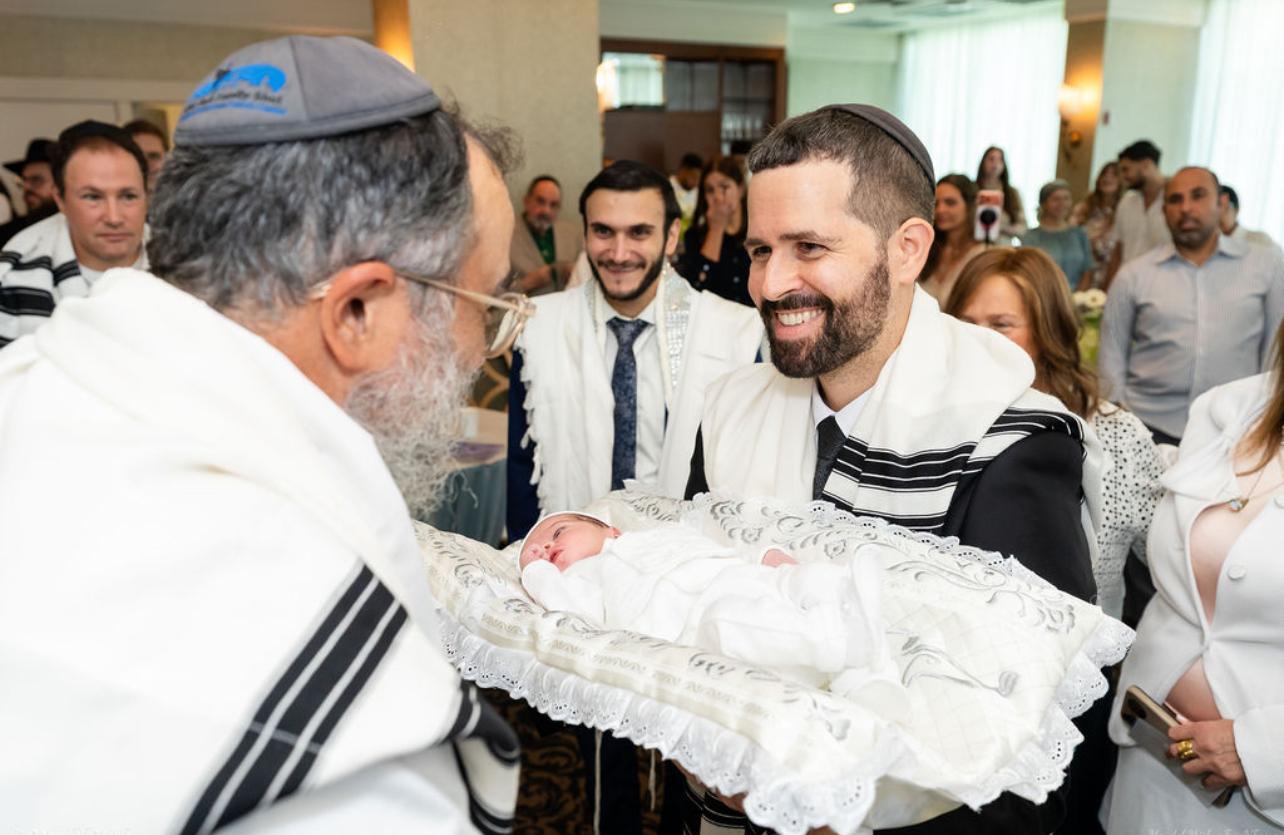
On the day itself, I arrive early — with everything the ceremony requires. The Brit pillow, tallit, kosher wine, all sterile medical supplies. You do not need to source or prepare anything.
Before the ceremony begins, I take the parents aside. I remind you — gently and personally — of the privilege of this mitzvah. Of what it means to welcome your son into this covenant. Of the thousands of generations of Jewish families who have stood exactly where you are standing.
The ceremony is performed with the highest halachic standards and the deepest medical care. Kosher in every detail. Warm, intentional, and meaningful — for you, your family, and every guest in the room.
And then, within seconds, it is done.
What Happens Right After
This is where The Brit Milah Experience is truly different.
I do not leave when the ceremony ends.
I hold your son. I soothe him. I feed him until he is calm — often calmer than the parents in the room. I stay until the color returns to everyone's face and the room fills again with simcha.
You receive clear, written aftercare instructions before I leave. And for the next 10 to 15 days, you have a direct line to me — 24 hours a day, 7 days a week. Photos, questions, reassurance at any hour. You are never alone in the recovery process.
This is what it means to truly care for a family — not just to perform a procedure.
The Deeper Truth About Pain
There is a concept in Jewish thought that suffering undertaken for a mitzvah carries meaning that ordinary suffering does not.
I am not saying the Brit Milah is painless. I am saying it is purposeful.
And I am saying — with 19 years of experience and more than 6,000 families behind me — that when the bris is performed with calm hands, proper preparation, and genuine care, what parents remember is not pain.
What they remember is the moment their son entered the covenant.
The blessings over the wine.
The Hebrew name spoken aloud for the first time.
The tears — the good kind.
The faces of the grandparents.
That is what stays.
Ready to Talk?
If you are expecting a baby boy in Coral Gables or the surrounding area — or your son has already arrived — I would love to speak with you.
Not to schedule something. Just to talk.
I will answer every question you have, walk you through the day, and help you understand what to expect. By the end of that first conversation, most parents tell me they already feel different.
That call costs you nothing. And it might change everything about how you experience your son's bris.
📞 (305) 318-1880
💬 WhatsApp: wa.me/13053181880
🌐 miamimohel.com
Rabbi Yossi Srugo is a Board Certified and Rabanut Certified Mohel serving Jewish families across Coral Gables, Miami-Dade, Broward, and Palm Beach County. He performs Brit Milah in Ashkenazic and Sephardic traditions, in Hebrew, English, and Spanish.